
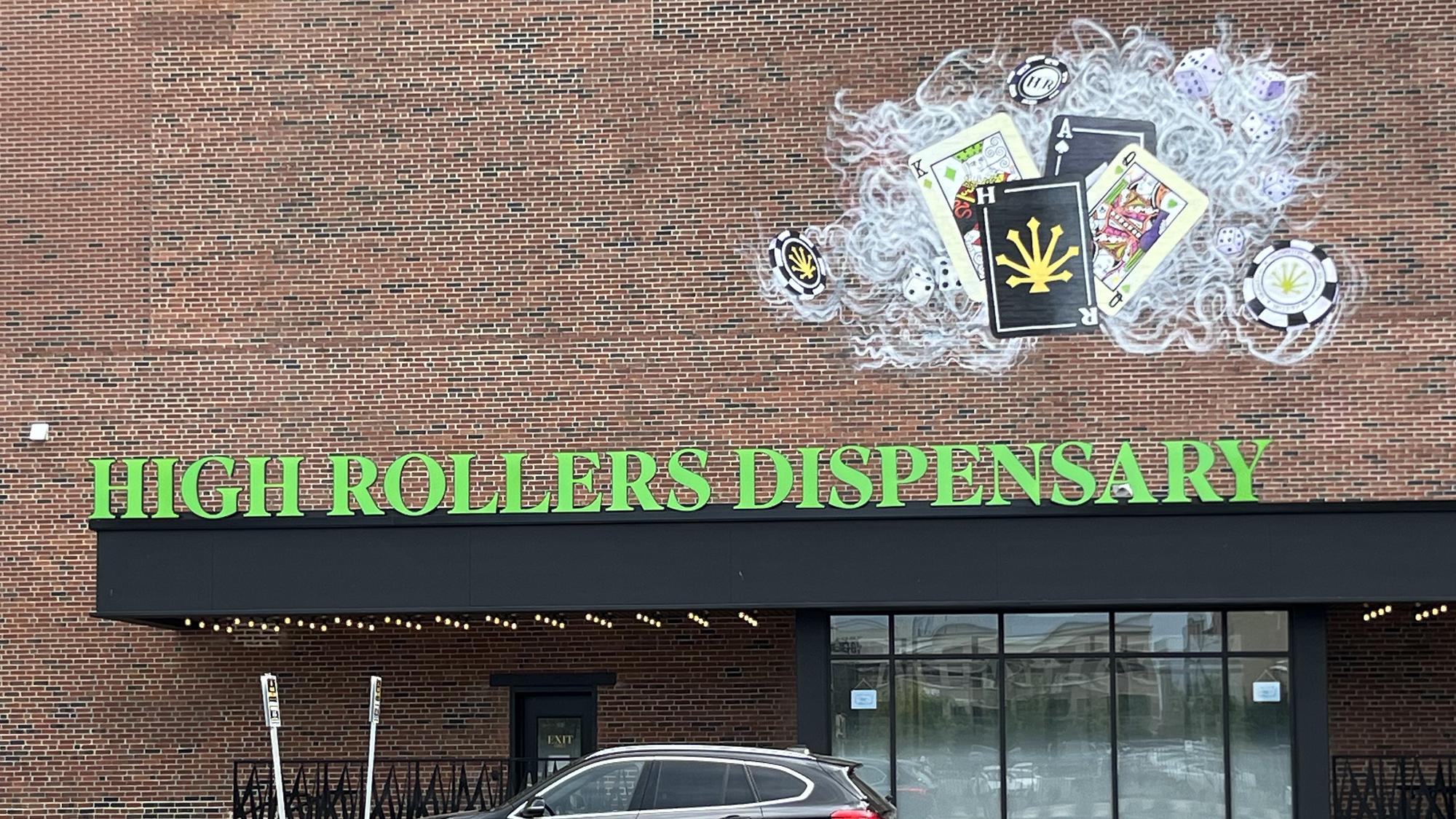
Atlantic City has moved to cap the number of recreational cannabis dispensaries operating within city limits—an explicit effort to cool down a market that local officials and stakeholders have described as crowded, fast-growing, and increasingly difficult for existing retailers to survive.
In late 2025, the City Council adopted Ordinance No. 87, formally establishing a limit on the number of Class 5 retail cannabis licenses that can operate in Atlantic City. The ordinance’s stated intent is straightforward: after several years of rapid “opt-in” growth following New Jersey’s adult-use legalization, Atlantic City wanted to prevent oversaturation from turning into a cycle of closures, vacant storefronts, and a weakened legal market.
What the cap does
Under Ordinance No. 87, Atlantic City set a total cap of 16 cannabis retailers, broken into:
- 12 standard Class 5 retail licenses, and
- 4 Class 5 microbusiness retail licenses
The ordinance also ties the cap to the city’s broader land-use and licensing structure, acknowledging that Atlantic City’s approach to cannabis was initially expansive and that demand to locate in the city “exceeded expectations.”
While New Jersey’s statewide framework is regulated by the NJ-CRC, Atlantic City’s move reflects a core reality of the Garden State’s rollout: municipalities have meaningful local control over how many cannabis businesses operate and where they can locate—especially when layered with special districts like the Tourism District. The City’s own guidance emphasizes that applicants must be licensed by both the State and the City, and that businesses in the Tourism District can face additional approvals.
Why Atlantic City chose to limit dispensary growth
The city’s cap didn’t appear out of nowhere—it followed persistent concerns that Atlantic City was moving toward an unsustainable density of stores.
A research study prepared for Atlantic City by Professor Rob Mejia (Stockton University) is central to the rationale. The report—dated June 23, 2025—was specifically designed to evaluate whether Atlantic City should implement a cap, with sections focused on the city’s “current cannabis landscape,” “challenges of oversaturation,” and market sustainability.
A separate legal analysis summarizing the city’s actions notes that Mejia’s study recommended an immediate cap of 16 dispensaries “to stabilize the market and safeguard the viability of existing businesses,” and observed that 15 cannabis retailers were operating as of June 2025.
In other words, the cap is less about restricting cannabis as a concept—and more about protecting the legal market from a problem that hits quickly in tourist-heavy, compact geographies: too many retailers chasing too few customers for too many hours of the year.
“Help existing dispensaries survive”: what that means in practice
The strongest argument for a cap is economic, not ideological.
When cannabis retail density rises too quickly, legal operators can get squeezed by:
- Price compression and constant discounting
- Higher marketing and customer-acquisition costs in a crowded field
- Real estate inflation, as more applicants compete for compliant properties
- The reality of seasonal tourism cycles, where foot traffic surges and fades
Local business advocates in the region have warned about this exact risk. In a November 2024 statement, the Greater Atlantic City Chamber argued that unchecked expansion could lead to “market saturation,” predicting that oversupply would drive failures and leave vacant storefronts, undermining the city’s investment climate.
The cap is essentially Atlantic City signaling: we want a sustainable number of operators that can remain viable long enough to become stable employers, stable taxpayers, and stable neighborhood tenants.
How the cap interacts with licensing, equity, and “who’s next”
One of the trickiest parts of any cap is what happens to businesses that are “in the pipeline.”
According to a legal breakdown of the ordinance and the process around it, Atlantic City’s cap ordinance was informed by a study that recommended “grandfathering” businesses with full approvals—while also urging firm timelines for opening and periodic re-evaluation.
But the ordinance itself is the controlling instrument. The first page of Ordinance No. 87 explicitly establishes the 12+4 structure and notes that the city commissioned a study and relied on findings accepted by the local Cannabis Review Board.
The practical consequence: a cap can create a dividing line between:
- Operators already open and serving customers, and
- Applicants still chasing approvals, property buildouts, and final signoffs
That’s why caps often trigger disputes about fairness and timing—even when they’re broadly popular with existing retailers.
The Tourism District factor
Atlantic City’s cannabis geography is unique because the Tourism District adds another layer of review. The City explains that applicants in the Tourism District must also satisfy the Casino Reinvestment Development Authority (CRDA).
Separately, the Cooper Levenson summary notes that CRDA has proposed draft rules that would add buffer requirements—including at least 200 feet between cannabis businesses—highlighting that Atlantic City’s cannabis market isn’t governed by just one decision or one agency.
Bottom line
Atlantic City’s cap is a classic “second-phase” move in a newly legal market: after opting in aggressively and seeing rapid clustering, the city is now trying to stabilize the retail landscape so the businesses already open have a realistic chance to survive, hire, and contribute to economic development without being drowned out by endless new storefront competition.
Whether the cap remains at 16 over the long term will likely depend on what the city sees next: store performance, tourism-driven demand, enforcement conditions, neighborhood impacts, and whether additional cannabis experiences (like consumption spaces and tourism programming) broaden demand enough to support more retail—without repeating the oversaturation problem that prompted the cap in the first place.